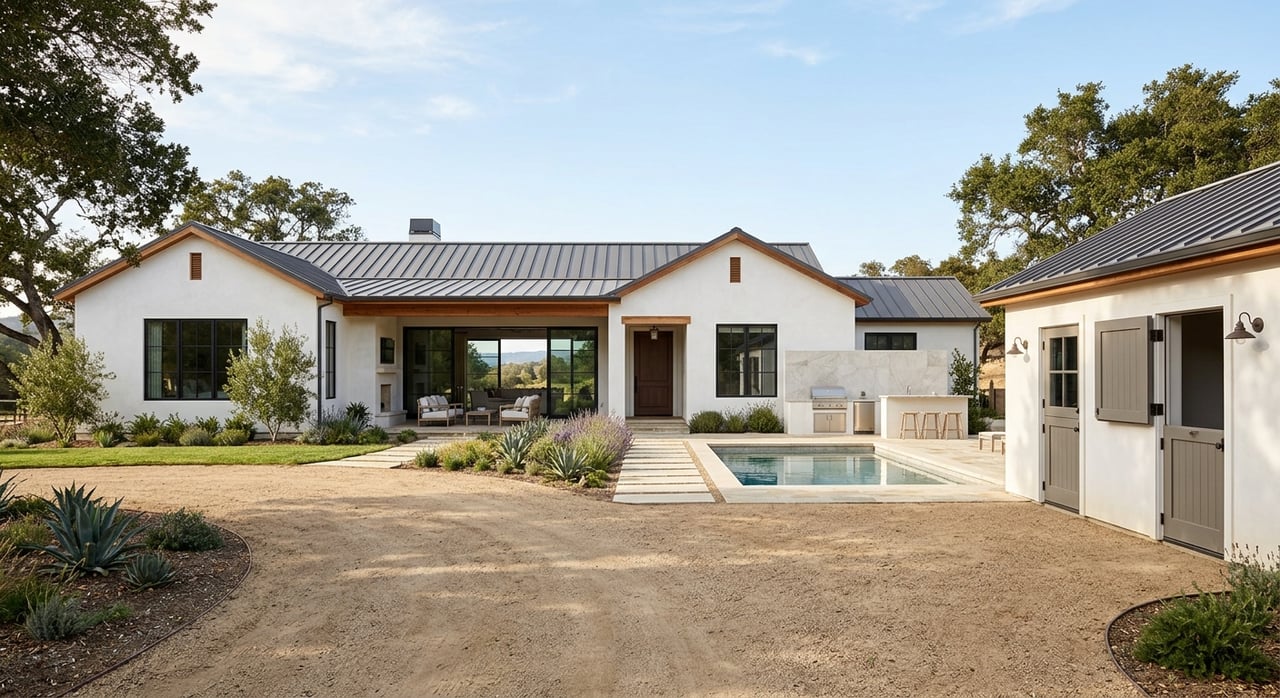
What Life in Santa Rosa Valley Acreage Homes Feels Like
If you have ever wondered what it feels like to trade tighter suburban living for open land, Santa Rosa Valley offers a very specific answer. Life here is less about packed amenities and more about space, quiet, trails, and a daily connection to the outdoors. If you are considering acreage in Ventura County, this guide will help you picture the rhythm, benefits, and practical realities of living here. Let’s dive in.
Santa Rosa Valley is an unincorporated Ventura County community with close transportation, recreation, and open-space ties to Thousand Oaks, according to county materials. It sits along the edge of the Conejo Valley and connects naturally to nearby open space, trails, and regional park access.
That location helps shape the feeling of everyday life. You are not cut off from surrounding areas, but you do experience a more private, low-density setting that feels distinct from denser suburban neighborhoods.
Acreage living in Santa Rosa Valley often feels calm, active, and outdoors-oriented. In a Ventura County community survey, 83% of respondents said they were very satisfied living there, and 65% described their neighborhood as very quiet.
That quiet is part of the appeal, but so is the sense of room around you. Instead of homes clustered tightly together, the area is defined in county planning documents by agriculture and rural residential development on large lots, a pattern that supports a lifestyle many buyers associate with ranchettes and estate-style properties.
For you, that can translate into a more spacious daily routine. Mornings may start with a walk on your own property, time in the garden, or a trail outing before work rather than a quick loop around a dense subdivision.
The climate helps make outdoor time feel natural through much of the year. Nearby Camarillo climate normals from NOAA show an annual mean temperature of 62.5°F, average daily highs of 73.0°F, average daily lows of 52.0°F, and about 12.01 inches of precipitation annually.
That pattern of mild temperatures, wetter winters, and very dry summers supports a lifestyle centered on being outside. It is one reason Santa Rosa Valley can feel so appealing if you value fresh air, movement, and usable outdoor space as part of ordinary life.
The county survey reflects that rhythm. Residents reported strong interest in walking and jogging, hiking, gardening, bicycling, and equestrian activity, suggesting that outdoor recreation here is often part of the weekly routine, not just something saved for weekends.
One of the clearest signs of Santa Rosa Valley’s acreage identity is its horse-friendly environment. Santa Rosa Valley Park offers 50 acres of open space, trail access, two equestrian riding areas with a training area, picnic tables with BBQs, and ample parking for horse trailers.
That public infrastructure matters because it reflects how the landscape is used. It also supports the broader idea that this is a community where equestrian activity is part of the local fabric rather than an unusual niche.
County watershed planning materials describe the area as principally agriculture and rural residential development on large lots, much of it using septic systems. In practical terms, many buyers are drawn to acreage here because the land-use pattern can support features often associated with larger properties, such as room for animals, storage, gardens, or outdoor gathering areas, though each property will differ.
A big part of Santa Rosa Valley’s appeal is the balance between privacy and access. County and MAC documents describe shared open space and trail relationships with the Conejo Valley, including links to Thousand Oaks, Wildwood Park, Hill Canyon, and Santa Rosa Valley Regional Park.
For many buyers, especially those coming from more conventional suburban neighborhoods, that balance is the sweet spot. You get a more private setting and larger parcels, while still maintaining practical access to nearby city services, shopping, and day-to-day destinations in the Thousand Oaks area.
This is one reason Santa Rosa Valley often feels more connected than remote. The setting is rural in character, but the broader regional context keeps it tied to the Conejo Valley lifestyle many buyers already know.
If you are comparing acreage living to master-planned neighborhoods, the difference is noticeable. Santa Rosa Valley is less about formal neighborhood amenities and more about the lifestyle created by land, quiet roads, trail systems, and outdoor use.
That may mean your social life looks different here. Instead of spending weekends at a clubhouse or shared pool, you may be more likely to host outdoor meals, meet friends for a trail ride or hike, or enjoy the simple luxury of having space to gather at home.
Survey data supports that idea. Residents showed interest in enhanced group picnic areas at the regional park, which fits with a community rhythm centered on outdoor gathering and recreation.
Acreage living can feel peaceful, but it is not purely effortless. In Santa Rosa Valley, long-term ownership often comes with a stronger awareness of land stewardship and preparedness than you might expect in a more typical subdivision.
In the county survey, residents highlighted traffic, fire safety, water, and road safety as top concerns. They also pointed to issues such as weed abatement and rated broadband and cellular service lower than core utilities like trash, electricity, and water.
That does not make the lifestyle less appealing. It simply means that living on larger land often asks more of you in return, whether that involves maintenance planning, understanding utilities, or thinking ahead about seasonal conditions.
Santa Rosa Valley also shows a strong local preparedness culture. The community survey notes a local CERT, an emergency trailer, and an emergency radio network.
County leaders and civic voices have also supported fuel-reduction and prescribed-burn efforts as ways to reduce wildfire fuel loads and help protect life and property. Ventura County additionally offers free home ignition zone assessments, which is a useful resource for property owners thinking proactively about resilience.
If you are considering acreage here, this is part of the ownership mindset to understand early. Buyers who thrive in this setting usually appreciate both the beauty of the land and the responsibility that comes with caring for it.
Santa Rosa Valley is clearly car-centered. In the county survey, many respondents said they would not use a proposed shuttle service to nearby cities, reinforcing the idea that daily errands and commutes are usually handled by car.
That matters when you picture your own routine. You are choosing space and privacy, but you are also choosing a setting where driving is part of normal daily life.
For many acreage buyers, that tradeoff feels worthwhile. The reward is a home environment defined more by land, quiet, and openness than by immediate walkability.
Santa Rosa Valley often appeals to buyers who want more than square footage alone. If you value privacy, outdoor living, room for hobbies or animals, and a setting that supports a slower, more grounded pace, this community may feel like a natural fit.
It can be especially compelling if you are coming from a denser part of the Conejo Valley and want more land without losing your connection to the region. The appeal is not just visual. It is about how your day feels when open space, quiet, and ownership of land become part of your normal routine.
If you are exploring Santa Rosa Valley acreage and want thoughtful guidance on lifestyle fit, land considerations, and long-term value, Julia Kanesawa offers a calm, high-touch approach grounded in both market insight and financial clarity.
Discover a seamless real estate experience with Julia Kanesawa, where expertise and dedication come together to achieve your goals. Partner with Julia for tailored guidance, market insight, and a refined approach to buying or selling your home.