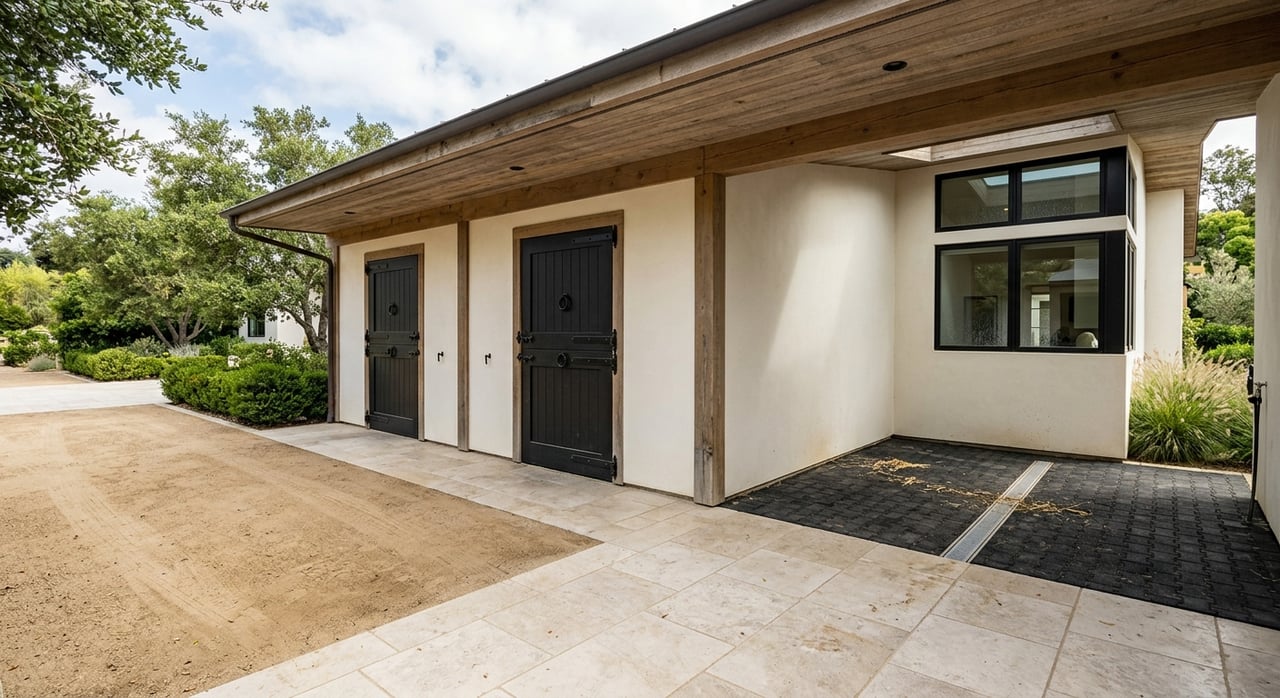
Equestrian Estates Or Hillside Retreats In Agoura Hills?
If you are drawn to Agoura Hills for its open-air lifestyle, the real question may not be whether to buy here, but how you want to live here. Some buyers picture a horse-ready property with direct trail access and usable land. Others want a hillside home with privacy, views, and a stronger connection to the surrounding landscape. This guide will help you compare both paths in Agoura Hills so you can choose with more clarity and confidence. Let’s dive in.
Agoura Hills has a distinct identity within the Conejo Valley. The city describes itself as the Gateway to the Santa Monica Mountains National Recreation Area, and that setting shapes how many people use their homes day to day. Hiking, biking, and equestrian access are part of the local lifestyle, not just a backdrop.
The city is also relatively compact, with elevations ranging from 936 to 2,036 feet and a population of about 20,299. In practical terms, that means home choices can shift quickly from flatter, more rural-feeling parcels to steeper, more view-oriented hillside sites. Your decision often comes down to what matters more to you: horse function and land utility, or privacy and scenic setting.
From a market perspective, Agoura Hills appears fairly balanced rather than heavily tilted toward buyers or sellers. As of spring 2026, Realtor.com reported 115 homes for sale, a median listing price of $1.50 million, a median of 42 days on market, and a 99% sale-to-list ratio, while Redfin showed a median sale price near $1.4 million. That balance gives you room to be thoughtful, especially when comparing two very different property types.
For the right buyer, an equestrian property is less about square footage and more about daily function. You may want space for stalls, corrals, turnout areas, trailer parking, fencing, and a workable path to nearby trails. In Agoura Hills, those details matter more than the acreage number alone.
Public code summaries note that the city’s EQ Equestrian Overlay District is intended to create, enhance, and protect the equestrian and rural atmosphere. Planning records also show properties tagged with combinations such as RV-OA-EQ. In areas like Old Agoura, local neighborhood materials describe a rural equestrian community where horse and livestock keeping is part of the overlay framework.
This lifestyle is supported by real public amenities. Old Agoura Park includes an equestrian arena that can be reserved, and the city’s Ladyface Greenway project is planned to add walking, biking, and equestrian trails along Agoura Road east of Cornell. Nearby Santa Monica Mountains destinations such as Cheeseboro/Palo Comado Canyon, Paramount Ranch, and Peter Strauss Ranch also allow horseback riding.
That means an equestrian home here can offer more than private land. It can support a connected, trail-based lifestyle that extends beyond your property line. If you want your home to function as a true horse property, Agoura Hills offers a meaningful local context for that use.
A good equestrian estate is about usable land, not just land on paper. Flat or functional areas for horses, equipment, movement, and access often matter more than a larger but awkward parcel. A beautiful lot is not necessarily a horse-ready lot.
Before you move forward on a property, it helps to confirm several practical items:
These details affect both how you live and how the property may perform at resale. In a niche segment, the buyers who will pay a premium tend to be very focused on function.
If your vision is more about views, privacy, and architecture, a hillside home may be the better fit. These properties often appeal to buyers who want a stronger sense of retreat and a setting that feels elevated, both literally and visually. In Agoura Hills, that appeal comes with a different kind of due diligence.
The city’s Housing Element explains that the Hillside Management Ordinance is designed to protect public health and safety related to fire hazards and slope stability while preserving natural character and scenic views. The same document ties density and open-space requirements to slope. At 10 to 15 percent slope, standards begin at 0.50 acres per unit with 32.5 percent open space, while 36 percent and greater slope requires 20.00 acres per unit and 97.5 percent open space.
Those rules help explain why hillside homes can feel more private and spacious. They also help explain why you may have less flat yard area than you expected. A dramatic setting can be a wonderful tradeoff, but it is still a tradeoff.
Hillside ownership usually involves more planning review and site investigation. The city has a dedicated Hillside Development Submittal Requirements packet and guidance for geotechnical studies. If you are thinking about future improvements, those requirements matter early.
Oak trees can also affect what you can do with the site. The city notes that protected oaks have a dripline-plus-five-foot protected zone, and construction near oaks, along with pools, patios, decks, walls, irrigation systems, and hardscaping, may trigger an Oak Tree Permit. If your goal is to create a polished outdoor living environment, this is a key part of the planning conversation.
Wildfire context is also central for hillside properties. The city posted 2025 Fire Hazard Severity Zone maps following updated CAL FIRE mapping, and the ratings consider factors such as vegetation, slope, weather, and fire history. Agoura Hills’ Housing Element also notes that new homes in Very High Fire Severity Zones require Class B roofs and non-combustible exterior materials.
In short, a hillside retreat can be deeply rewarding, but it asks you to be comfortable with slope-related due diligence, design constraints, and fire-zone awareness. If you value privacy and views more than broad flat space, that may be a worthwhile exchange.
The simplest way to compare these homes is to ask what problem you want your property to solve. If you want a horse-and-trail lifestyle with a rural feel, an equestrian estate is usually the better match. If you want a view-and-privacy lifestyle with a more architectural feel, a hillside retreat may be the stronger choice.
Here is a simple side-by-side comparison:
| Feature | Equestrian Estate | Hillside Retreat |
|---|---|---|
| Primary appeal | Horse use, trails, rural character | Views, privacy, natural setting |
| Best for | Buyers prioritizing land function | Buyers prioritizing outlook and retreat feel |
| Key due diligence | Zoning, overlays, easements, horse setup | Slope, geotechnical review, oak impacts, fire zone |
| Typical tradeoff | Smaller buyer pool | Less flat usable yard space |
| Lifestyle focus | Daily utility and access | Atmosphere and scenery |
Neither option is inherently better. The right choice depends on how you want to spend your time, how much maintenance or review you are comfortable with, and how you define long-term value.
From a resale standpoint, equestrian homes are typically a narrower submarket. Old Agoura had only 5 active listings in the referenced market snapshot, with a median sale price of $1.7 million and a median price per square foot of $926. Compared with citywide Agoura Hills, where there were 115 homes for sale and a median listing price of $1.50 million, that suggests Old Agoura can command a premium, but the buyer pool is smaller and pricing may move more sharply when sales volume is limited.
That does not make equestrian property riskier by default. It simply means resale often depends on whether the property truly delivers the horse-ready features buyers expect. In niche luxury segments, authenticity matters.
For both property types, future connectivity projects are worth watching. The city says Ladyface Greenway will improve pedestrian, bike, and equestrian connectivity, and the Regency Center redevelopment includes a public equestrian path and trail connecting toward that Greenway. Over time, these projects may improve access around Agoura Road and Cornell, while also changing how nearby traffic and activity feel.
Whether you prefer an equestrian estate or a hillside retreat, a careful review upfront can save you time and money later. Agoura Hills properties often have value tied to conditions that are not obvious from photos alone.
As you evaluate homes, make sure you confirm:
This is where thoughtful guidance matters. A property can look perfect online and still fall short once you assess how it functions on the ground.
In Agoura Hills, equestrian estates and hillside retreats are both premium choices, but they deliver value in different ways. One centers on land utility, horse access, and rural character. The other centers on privacy, views, and a stronger relationship to the surrounding hills.
If you are deciding between the two, the best next step is not to chase a label. It is to define the lifestyle you want, the constraints you can comfortably manage, and the features that will still matter to you years from now. For a thoughtful, high-touch conversation about which Agoura Hills property style best fits your goals, connect with Julia Kanesawa.
Discover a seamless real estate experience with Julia Kanesawa, where expertise and dedication come together to achieve your goals. Partner with Julia for tailored guidance, market insight, and a refined approach to buying or selling your home.