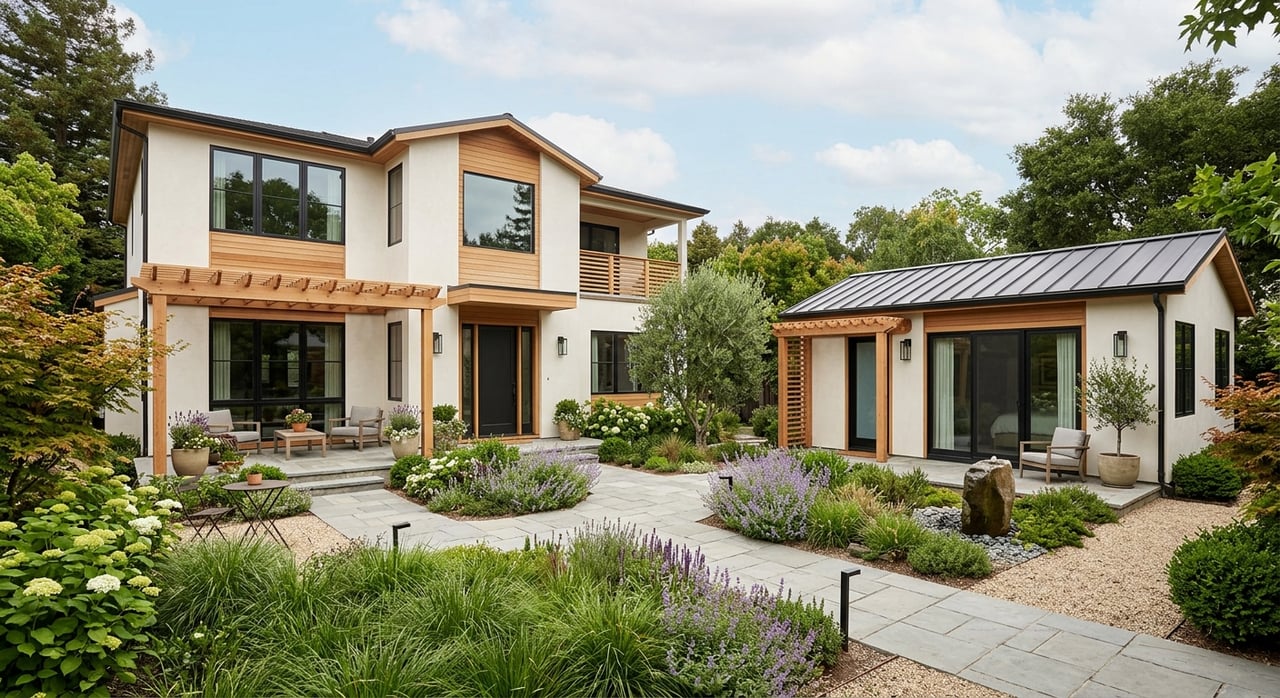
Smart Ways to Design Camarillo Multigenerational Homes
If your household needs more flexibility, more privacy, or simply more room to live well together, Camarillo can be a smart place to start. Many buyers and homeowners here are thinking beyond simple bedroom counts and looking at how a home can support aging parents, adult children, long-term guests, or caregiving needs. With the right layout and a clear understanding of local rules, you can make a thoughtful plan for multigenerational living in Camarillo. Let’s dive in.
Camarillo has several traits that make multigenerational housing worth exploring. The city’s 2020 to 2024 QuickFacts profile shows 2.65 persons per household, with 23.0% of residents age 65 and older and 20.7% under 18. It also shows a 64.6% owner-occupied housing rate and a median owner-occupied home value of $827,300.
Those figures do not prove that most homes are multigenerational. They do suggest a local housing landscape with both older homeowners and family households, which often creates demand for flexible living arrangements. If you are planning for life stages, caregiving, or long-term shared housing, that context matters.
Camarillo’s housing stock also leans heavily toward homes that may offer more design flexibility. SCAG’s local profile shows 60.0% single-family detached homes and 16.9% single-family attached homes. In practical terms, that means many buyers are looking at properties where reconfigured layouts, additions, or secondary living space may be possible.
Multigenerational living is not just about fitting more people under one roof. It is about creating a home that supports connection and privacy. The best setups allow family members to share daily life while still having separate sleep zones, comfortable circulation, and a sense of independence.
That is why layout matters as much as square footage. A five-bedroom home can still feel tight if everyone shares one main hallway and one busy bathroom zone. On the other hand, a well-planned home with flexible rooms, multiple bathrooms, and a first-floor suite can feel much more functional.
For many Camarillo buyers, the goal is long-term adaptability. You may need space for parents now, room for returning adult children later, or a private guest area that can evolve with your family over time. A home that gives you options often offers the best value.
When you tour homes in Camarillo, look beyond finishes and staging. Focus on the structural and layout features that make daily life easier for multiple generations.
Some of the most useful features include:
These details can shape how comfortably a home works today and how well it may adapt later. If your goal is to create space for independent living, circulation and access become especially important.
In multigenerational planning, the lot itself can be just as important as the floor plan. Lot shape, side-yard width, driveway geometry, and the location of existing structures can all affect what is realistic in the future.
This is especially relevant in parts of Camarillo with larger residential lots. City zoning materials describe the R-E, or Rural Exclusive, zone as a large-lot residential zone with lots ranging from 10,000 square feet to 1 acre or more. More yard space does not guarantee that an addition or detached suite will be approved, but it can improve physical feasibility.
If you are comparing homes, pay attention to how the lot is laid out. A deep backyard, clear side access, or an existing detached structure may give you more paths to create flexible living space over time.
In California, accessory dwelling units, or ADUs, are one of the most common ways to create secondary living space. State housing guidance recognizes detached ADUs, attached ADUs, and repurposed existing-space ADUs. That makes them highly relevant for households planning for multigenerational living.
A junior accessory dwelling unit, or JADU, is different. The state’s March 2025 guidance says ADU owner-occupancy requirements were removed under AB 976, while JADU guidance still shows owner occupancy as required. That distinction matters if you are thinking about how separate the space needs to be.
In simple terms, an ADU may be a better fit when your household wants more independent occupancy. A JADU may function more like an in-home suite within the main residence. The right option depends on your property, your goals, and current local rules.
This is one of the most important parts of the process. Even if a home looks ideal for a guest house, in-law setup, or private suite, you need to confirm what is allowed before making assumptions.
California’s ADU framework is intended to streamline qualifying projects through ministerial review rather than discretionary hearings. At the same time, local compliance and ordinance updates matter. In a March 6, 2025 findings letter, HCD said Camarillo’s ADU ordinance did not fully comply with then-current state ADU and JADU law and needed updates, including changes related to multifamily ADU allowances.
The practical takeaway is simple: always check the current code. If you are evaluating a Camarillo property for multigenerational potential, treat older summaries with caution and confirm the latest city or county requirements first.
Not every property with a Camarillo address falls under the same regulations. Before you rely on any rule about additions, conversions, setbacks, or parking, confirm whether the property is inside Camarillo city limits or in an unincorporated Ventura County area.
That distinction matters because the City of Camarillo and Ventura County Resource Management Agency may have different procedures and updated regulations. Ventura County notes that its ADU and JADU regulations were comprehensively revised in 2023 and 2024. A property’s exact jurisdiction should be part of your early due diligence.
If you are shopping for a home with multigenerational goals in mind, ask practical questions early. This can save you time and help you focus on homes with stronger long-term potential.
Consider asking:
These questions do not replace formal planning or design review. They do help you evaluate a property with more clarity and confidence.
A well-chosen multigenerational home can support both lifestyle and financial planning. It gives you the ability to respond to family changes without needing to move right away, and it may offer a more resilient way to use space over time.
In Camarillo, that often means looking for homes with a strong base layout first. Then you can assess whether the property also offers zoning-ready flexibility through lot size, access, and possible conversion or ADU pathways. The best opportunities usually come from matching your real-life needs with what the property can realistically support.
If you are weighing options in Camarillo, a calm, tax-aware, and design-conscious search can make all the difference. The goal is not just to buy more space. It is to choose a home that supports your life now and gives you room to adapt well into the future.
If you are thinking about multigenerational living in Camarillo and want thoughtful guidance on layout, long-term value, and property potential, connect with Julia Kanesawa for a complimentary consultation.
Discover a seamless real estate experience with Julia Kanesawa, where expertise and dedication come together to achieve your goals. Partner with Julia for tailored guidance, market insight, and a refined approach to buying or selling your home.